On October 6th, 2025, an esteemed member in the PANDAA Lab, Kayce Hopper, successfully proposed her dissertation titled "The Impact of Distress Tolerance on the Association between Sleep Disturbances and Alcohol Use among College Students." We look forward to the completion of Kayce's dissertation and its contribution to the field. See below for a summary of her project:
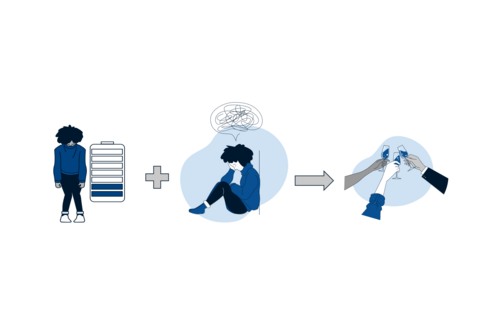
Sleep disturbances and alcohol misuse are prevalent among undergraduate students, and are associated with numerous negative outcomes, such as increased risk for suicide and mental health conditions. Sleep difficulties, such as shorter sleep durations, low sleep efficiency, and insomnia symptoms have been linked to alcohol use among young adults. In addition, issues within these areas of sleep have been linked to distress tolerance while distress tolerance in turn has been associated with alcohol use with differences based on gender. No empirical work has examined these associations among college students utilizing both objective and subjective measures of sleep. The current study aims to examine the associations between sleep (i.e., sleep duration measured via actigraphy, self-reported sleep efficiency, sleep efficiency measured via actigraphy, and self-reported insomnia symptoms), distress tolerance, and hazardous alcohol use among undergraduate drinkers. It is hypothesized that actigraphy derived sleep duration, actigraphy derived sleep efficiency, self-reported sleep efficiency, and self-reported insomnia symptoms will be positively associated with distress tolerance, such that undergraduates with lower levels of these sleep variables will also report lower levels of distress tolerance. In addition, it is hypothesized that distress tolerance will interact with sleep duration measured via actigraphy, self-reported sleep efficiency, sleep efficiency measured via actigraphy, and self-reported insomnia symptoms in association with hazardous alcohol use. More specifically, as levels of distress tolerance decrease, sleep duration and sleep efficiency variables will be more strongly, negatively associated with hazardous drinking while insomnia symptoms will be more strongly, positively associated with hazardous alcohol use. Furthermore, it is hypothesized that gender will moderate the proposed relationships.
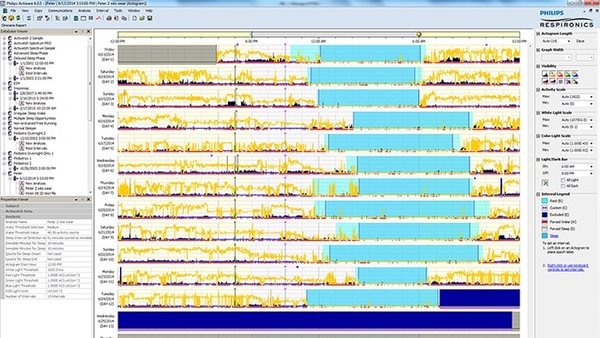
Below is an example of the actigraphy data gathered from the actiwatches. This photo is an example provided by the Philips Respironic Website.